
Gaming’s changing fast. Like, really fast. And while everyone’s talking about the “next big thing,” some trends are actually reshaping how we game right now. Let’s skip the hype and look at what’s really happening.
Cloud Gaming Is Finally Getting Good
Remember when streaming games sounded impossible? Well, it’s not anymore. Companies like Microsoft with Xbox Cloud Gaming and NVIDIA with GeForce Now have figured it out. You can literally play Cyberpunk 2077 on your phone now – assuming your internet doesn’t hate you.
The best part? You don’t need a $2,000 gaming rig. Got decent internet and any device made after 2015? You’re good to go. Sure, there’s still input lag sometimes, but it’s getting better every month. Google’s Stadia didn’t make it, but that doesn’t mean cloud gaming is dead. Far from it.
eSports Went Mainstream (And We Barely Noticed)
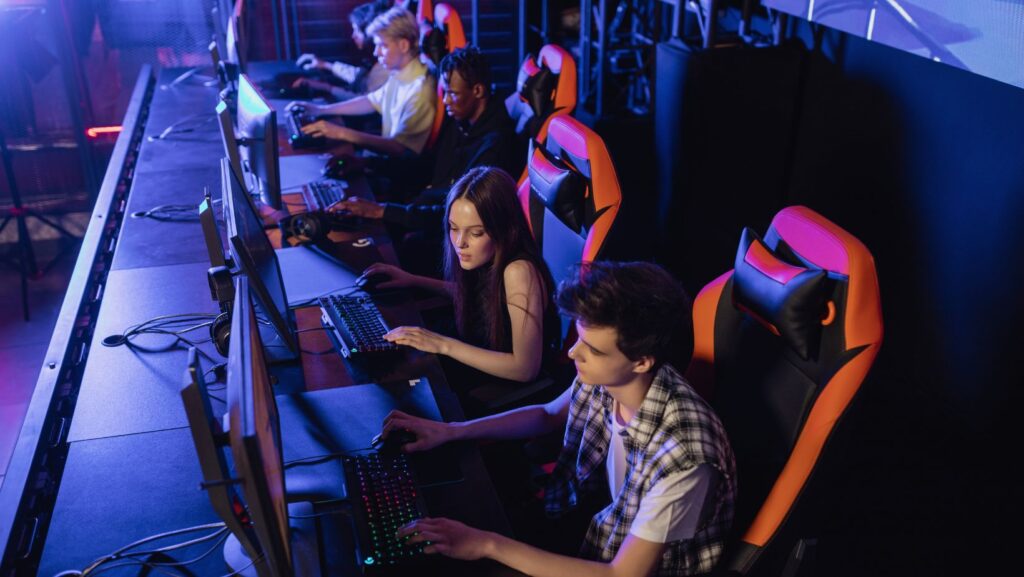
My nephew makes more money playing Valorant than I do writing about games. That’s… actually kind of depressing, but also amazing. eSports hit $1.4 billion in revenue last year, and traditional sports teams are buying eSports franchises like they’re collecting Pokémon cards.
Universities now offer eSports scholarships. There are eSports high schools. My local community college has a better gaming setup than most streamers. Games like League of Legends and Dota 2 pack arenas, while newer titles fight for their piece of the pie. Even poker is getting in on the action – ACR Poker might be exploring eSports opportunities, too.
VR Finally Stopped Being a Gimmick
Okay, I was wrong about VR. For years, I thought it was just expensive tech demo nonsense. Then I played Half-Life: Alyx and Beat Saber, and… yeah, I get it now.
The Quest 2 (now Meta Quest 2) costs less than a PS5 and doesn’t need a PC. That’s huge. Developers aren’t just making “VR experiences” anymore – they’re making actual games. Resident Evil 4 VR feels completely different from the original. You’re not watching horror; you’re living it.
Plus, VR’s branching out. Medical students practice surgery in VR. Architects walk through buildings before they’re built. It’s not just gaming anymore.
Cross-Platform Play Broke Down the Console Wars
Remember when PlayStation and Xbox players couldn’t play together? Those days are mostly over, and gaming’s better for it. Fortnite started the revolution, but now it’s everywhere. Call of Duty, Rocket League, Minecraft – your platform doesn’t matter anymore.
This shift forced Sony to play nice after years of resistance. When your friends can play together regardless of what console they bought, everyone wins. Developers love it too – bigger player pools mean shorter matchmaking times and longer game lifespans.
Blockchain Gaming Is… Complicated
Here’s where things get weird. NFTs in gaming crashed harder than my K/D ratio in Dark Souls, but blockchain tech is still lurking around. Some games let you actually own digital items that persist across different games. Others are just expensive JPEGs with extra steps.
The technology has potential – imagine truly owning your rare weapon skin and selling it years later. But right now, most blockchain games feel like investment schemes disguised as entertainment. CryptoKitties was cute, but it also clogged the Ethereum network.
What’s Next?
These trends aren’t slowing down. Cloud gaming will get better as internet infrastructure improves. eSports will keep growing (and making me feel old). VR will get cheaper and more comfortable. Cross-platform play will become standard. And blockchain gaming? We’ll see if it finds its footing or fades away.
The gaming landscape in 2026 looks nothing like it did five years ago. And honestly? That’s pretty exciting, even if it makes my game collection feel ancient.