
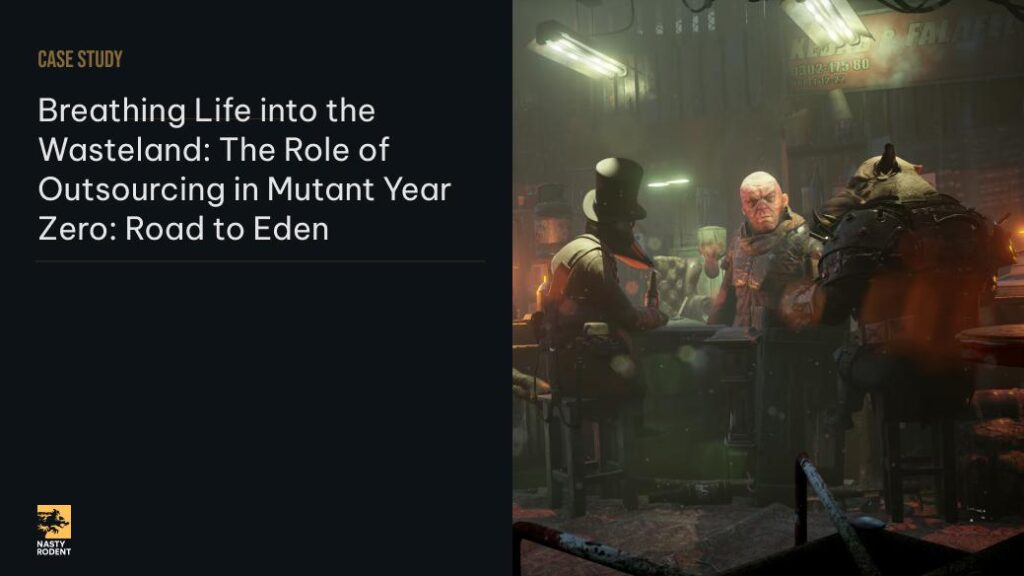
From the moment you enter Mutant Year Zero: Road to Eden, you are presented with more than a tactical battlefield. The game builds a cohesive post-apocalyptic world with a distinctive atmosphere, visual language, and identity.
Much of that identity comes from the environment: abandoned structures, corroded metal, remnants of the old world, improvised equipment, and countless smaller details that help tell the story without relying on words.
Creating such a cohesive visual experience requires a significant amount of art production, clear art direction, and a well-structured production pipeline. Every new asset must not only meet technical requirements but also feel like a natural part of an already established world.
This is where external art teams can play an important role. By integrating into the developer's existing workflow, they can help scale content production while maintaining the visual and technical consistency of the project.
Let's take a closer look at how that process works.
Building the Wasteland
Creating assets for a world shaped by the collapse of civilization involves far more than simply adding rust, scratches, or dirt to an otherwise pristine 3D model.
Every object needs to feel as though it has existed within that environment for years.
Artists need to consider the history of its materials, patterns of wear, construction logic, functionality, and how the object fits into the broader visual language of the game.
The process often begins with Concept Art, which establishes the foundation for the asset.
At this stage, artists define its silhouette, proportions, construction, materials, and functionality. For improvised post-apocalyptic equipment, this also means understanding how pieces of metal, electronics, fabric, and scavenged components could realistically be assembled into something functional.
Once the 2D foundation is established, production moves into 3D.
One of the key challenges is finding the right balance between stylization and realism.
Shapes need to remain consistent with the game's art direction, while materials and textures – chipped paint, oxidized metal, dried mud, abrasion, corrosion, and mechanical damage – need to preserve a convincing sense of physical authenticity.
This is how 3D props become more than background decoration and begin contributing directly to environmental storytelling.
A rusted medical kit, an improvised barricade, an old container, or a piece of abandoned equipment can communicate information about the world and its history without requiring additional exposition.
At the same time, visual detail must never come at the expense of gameplay readability.
In a tactical game, players need to quickly understand the function of environmental objects and distinguish, for example, between full and partial cover.
Artists therefore need to constantly balance atmosphere, visual complexity, and the practical requirements of gameplay.
Weapons, Equipment, and Characters
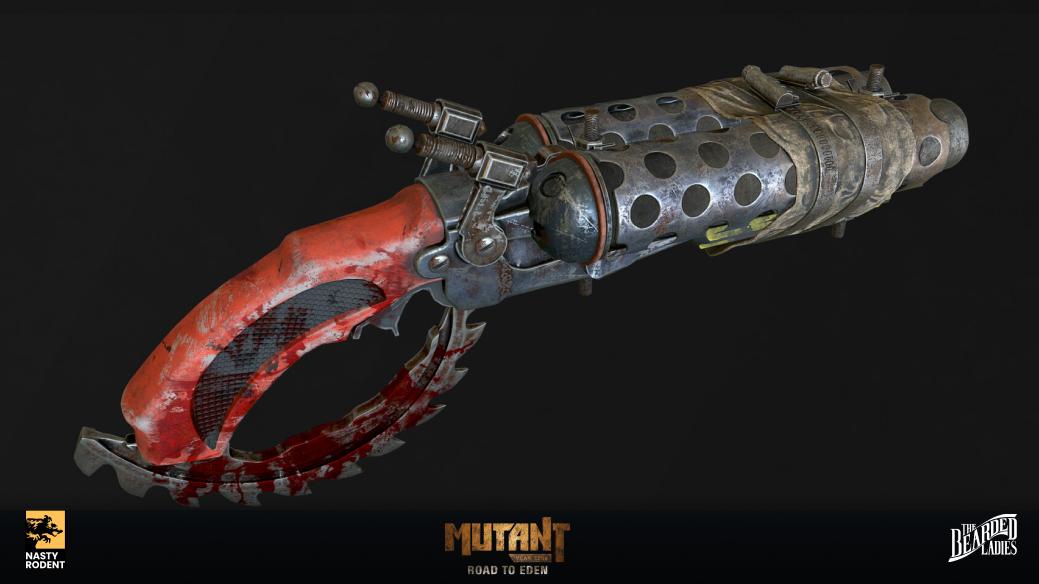
In a tactical turn-based RPG, the camera frequently moves closer to the characters and their equipment.
During key combat moments, a weapon can occupy a significant portion of the screen, making the quality of its geometry, materials, and textures immediately noticeable.
This is where a specialized production pipeline becomes particularly important.
Creating 3D weapons for a project like this requires attention not only to the overall form but also to smaller details.
Where would a character's hands naturally wear down the surface of a grip? Where would paint begin to chip? Where would dirt collect? Which parts of the construction would experience the most mechanical stress?
These details help make a weapon believable and allow it to feel naturally integrated into the game world.
For an external team, the goal is not to introduce a separate visual language, but to accurately adapt to the art direction established by the core development team.
The same principle applies to character equipment.
Working with complex shapes and unconventional anatomy requires a strong understanding of modeling, proportions, rigging, and deformation.
Equipment needs to support the character's design and silhouette while also functioning correctly during animation and avoiding unwanted intersections or clipping.
As a result, weapons and equipment become more than standalone 3D assets. They become an integral part of character design and the broader visual language of the game.
Nasty Rodent's Work on Mutant Year Zero: Road to Eden
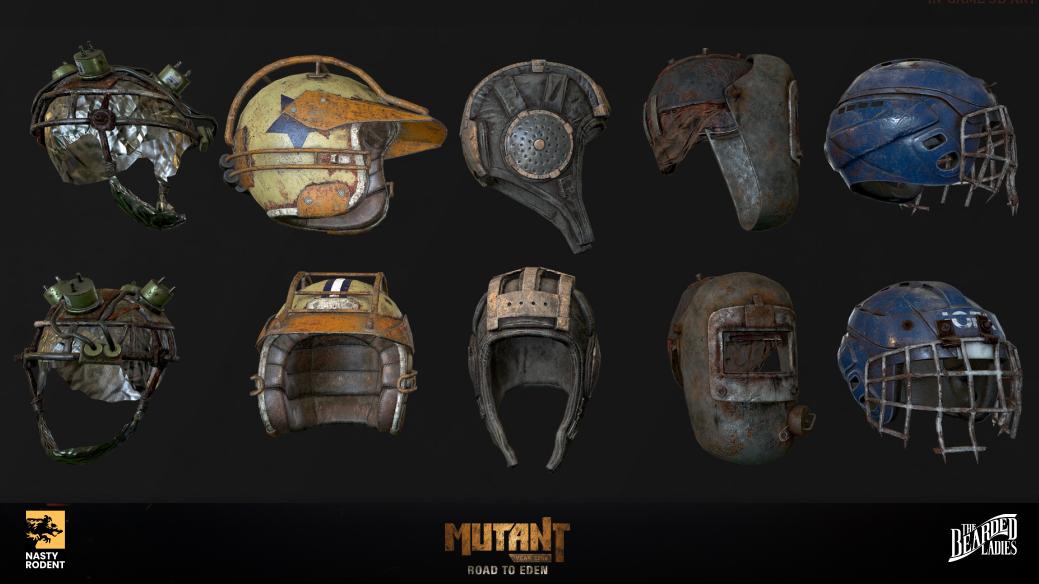
Nasty Rodent was one of the external art teams that contributed to Mutant Year Zero: Road to Eden.
As part of the project, our team worked across several categories of 3D content, including weapons, character equipment, props, and environment assets.
Each of these areas required us to work within an already established visual language.
Whether we were creating a weapon, a piece of equipment, a smaller prop, or an environmental asset, every element needed to feel like a natural part of the game's post-apocalyptic world while meeting the project's technical and artistic requirements.
Particular attention was given to materials and surface treatment.
Exposed metal, damaged paint, dirt, corrosion, abrasion, and other signs of use were not simply added for visual complexity. They needed to reinforce the history and function of each object.
This was especially important when working on props and environmental assets.
Even relatively small objects can have a significant impact on how a location feels. They help define the purpose of a space, support environmental storytelling, and make the world feel more lived-in and believable.
At the same time, these assets need to remain part of a cohesive visual environment rather than drawing unnecessary attention to themselves.
That is one of the core challenges of external art production: the goal is not simply to create a high-quality standalone asset, but to extend an existing artistic language in a way that feels seamless.
Integrating an External Team into the Production Pipeline
Effective game art outsourcing involves much more than handing a list of assets to an external studio.
The team needs to understand the project's art direction, technical requirements, engine limitations, material standards, target level of detail, and optimization guidelines.
An efficient feedback loop between the internal and external teams is equally important.
The early stages of production help establish expectations around quality and style. Once that alignment is in place, the external team can work more efficiently on subsequent assets because it has developed a deeper understanding of the project's visual language and production requirements.
This becomes particularly important when multiple categories of content are involved.
Weapons, character equipment, props, and environment assets all serve different purposes and come with different technical requirements. Yet they still need to feel as though they were created as part of the same world and under the same artistic direction.
When an external partner reaches that level of integration, it becomes a natural extension of the internal art production team.
This allows developers to scale content production while maintaining consistency in quality, detail, and overall visual direction.
The Details That Build a World
In a game like Mutant Year Zero: Road to Eden, the credibility of the world is not defined by a single hero asset.
It comes from hundreds of details working together.
Weapons, character equipment, everyday objects, barricades, abandoned machinery, structural elements, and environmental assets all contribute to the feeling that the world existed long before the player entered it.
For an artist, it is therefore important to understand not only what an object should look like, but why it looks that way.
Where did it come from?
How was it used?
What materials would have been available?
Which parts might have been replaced or repaired?
How would the environment have affected its condition over time?
Questions like these help transform a technically strong 3D asset into something that actively supports the story, atmosphere, and identity of the game.
Final Thoughts
Mutant Year Zero: Road to Eden is a strong example of how environments, materials, weapons, equipment, props, and smaller visual details work together to shape the player's perception of a game world.
On projects like this, outsourcing can become more than a way to increase production capacity. It can function as an integral part of the art pipeline.
For that to work, an external team needs to do more than produce technically polished models.
It needs to understand the project's artistic direction, technical requirements, design principles, and the role each asset plays within the broader player experience.
For Nasty Rodent, our work on weapons, character equipment, props, and environment assets for Mutant Year Zero: Road to Eden was exactly that kind of process: contributing within an established visual framework and creating content designed to feel like a natural part of the game's world.
Ultimately, the ability to integrate into an existing production pipeline and faithfully support an established artistic language is what allows an external art team to become a true extension of the core development team.